


Industrial design and
product development
From a single part to a new product. Practical design, clear communication and support through to manufacture.
Your idea.
A practical path forward.
We work with you to understand the problem, explore solutions and develop the details. Whether you need a single component or a complete product, we can help with design, prototyping and manufacturing coordination.
How the process works
A clear path from idea to manufacture.
Six stages guide the design process. Your starting point and scope depend on the project. A feasibility review can help clarify a new idea, and design, prototyping and testing may develop alongside one another.
Problem, goals and feasibility
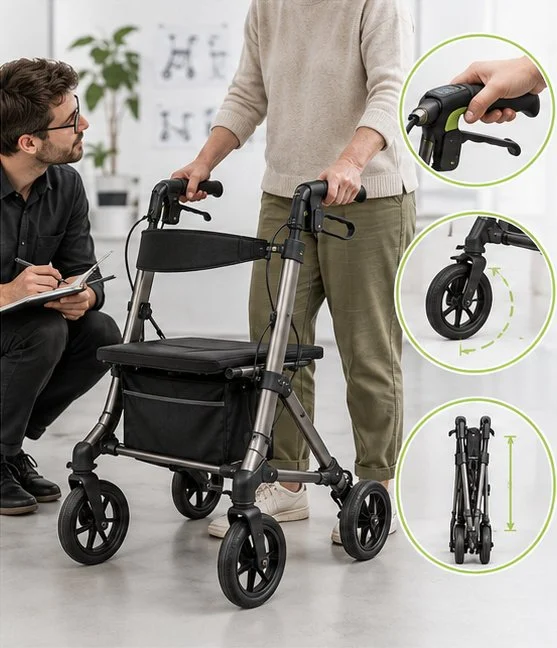
We begin by understanding your idea, who will use the product and the problem it needs to solve. We review your instructions, sketches, reference products or existing parts, then identify the requirements, constraints and questions to resolve.
For a new product with unresolved technical or manufacturing questions, a feasibility review can help you decide whether and how to proceed before detailed development.
What can a feasibility review include?
The scope may include preliminary sketches or basic computer-aided design (CAD), material and manufacturing options, potential suppliers, indicative prototype and production costs, and testing or specialist input that may be needed.
We agree the scope and outputs before work begins. These may include preliminary design work, a findings report and recommended next steps.
Preliminary models are prepared for investigation and costing. Further development and validation are needed before they are suitable for production.
Concept development
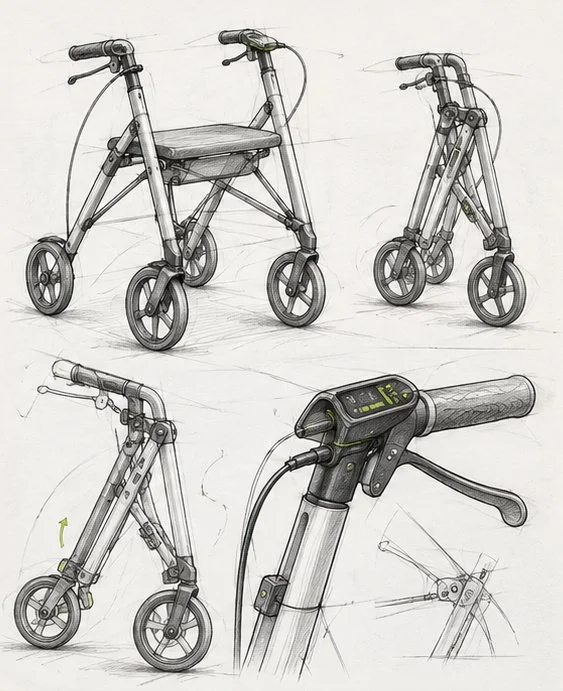
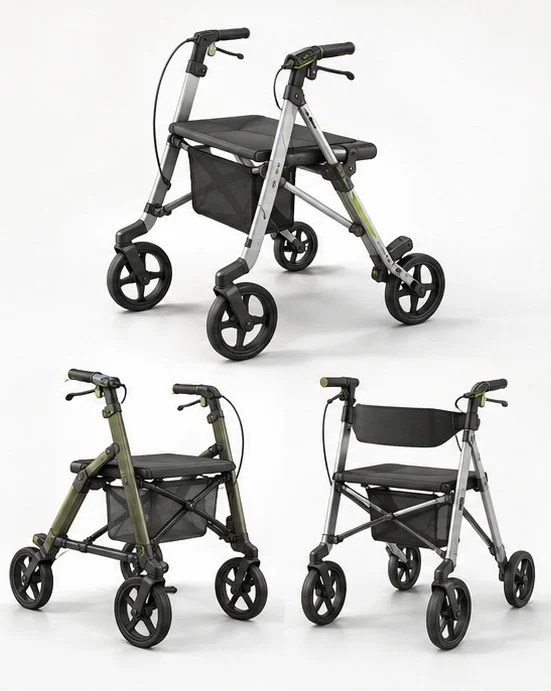
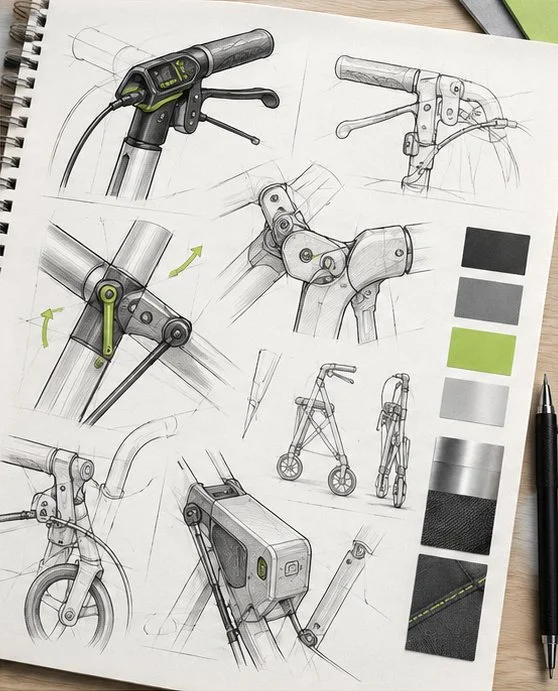
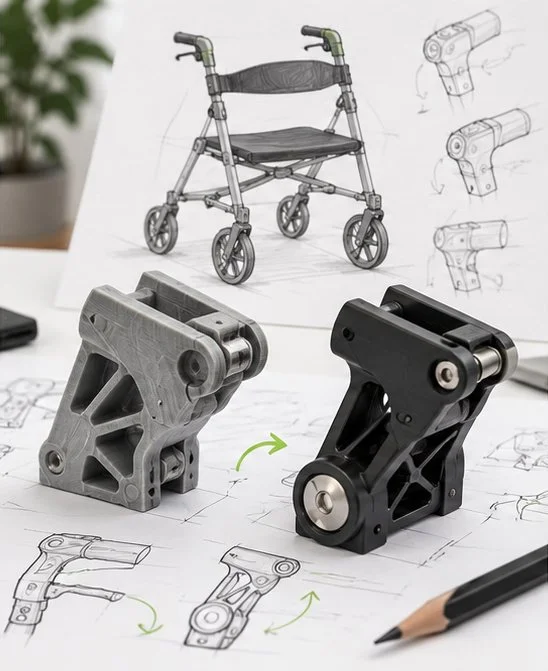
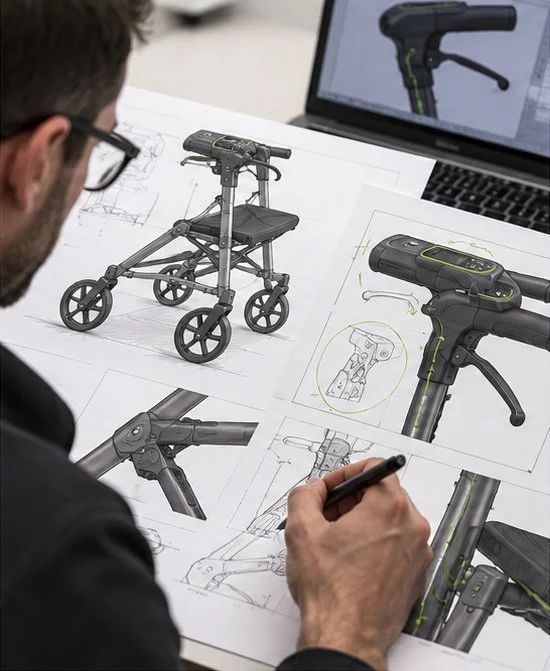
We explore the product's form, function and construction through sketches, reference research, preliminary layouts and visual concepts.
Together, we compare the strengths, limitations and trade-offs of possible approaches before selecting a direction for detailed design.
3D CAD development
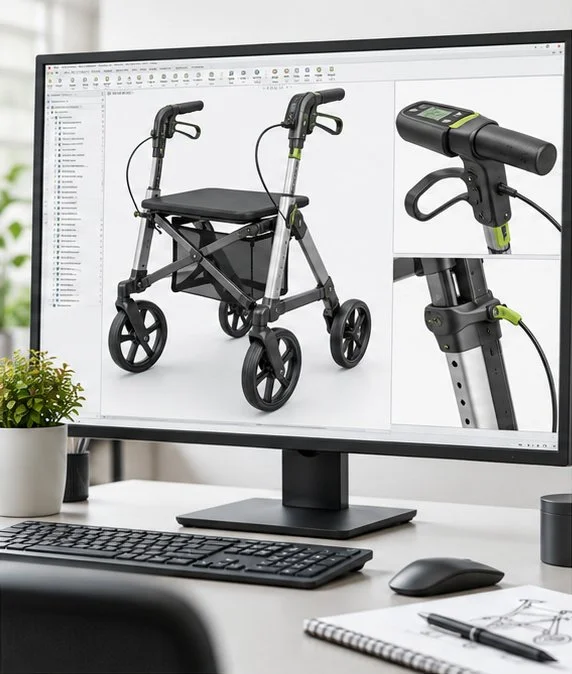
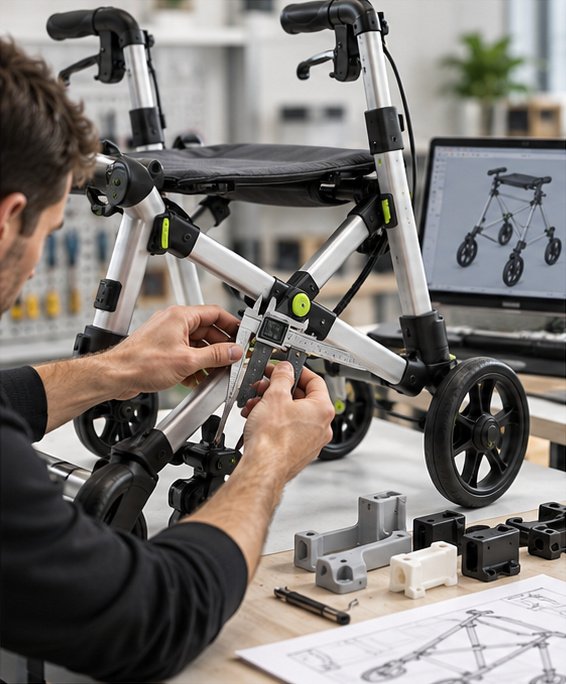
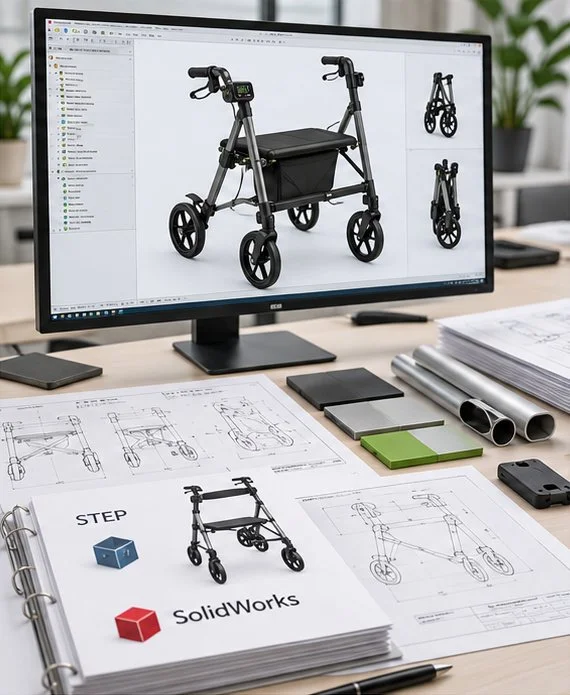
We develop the selected concept in SolidWorks, our computer-aided design (CAD) software. The model defines dimensions, component relationships and assembly details.
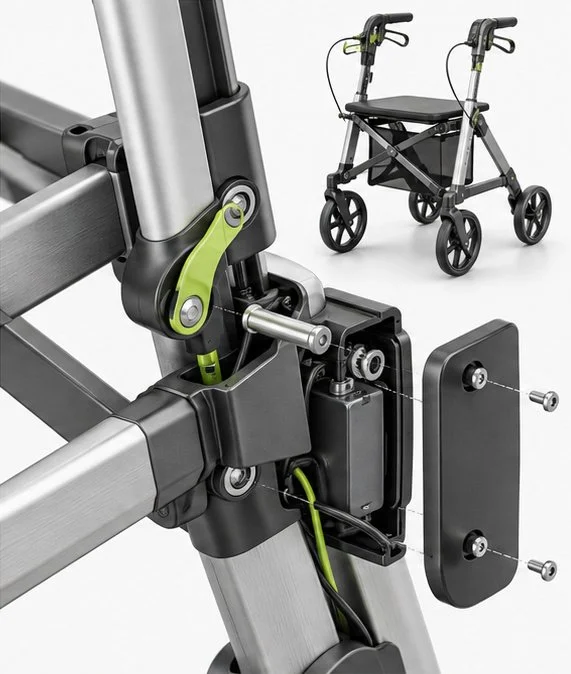
We consider wall thicknesses, fasteners, clearances, materials and manufacturing processes. CAD views allow you to review the design before physical parts are made.
Prototype and test
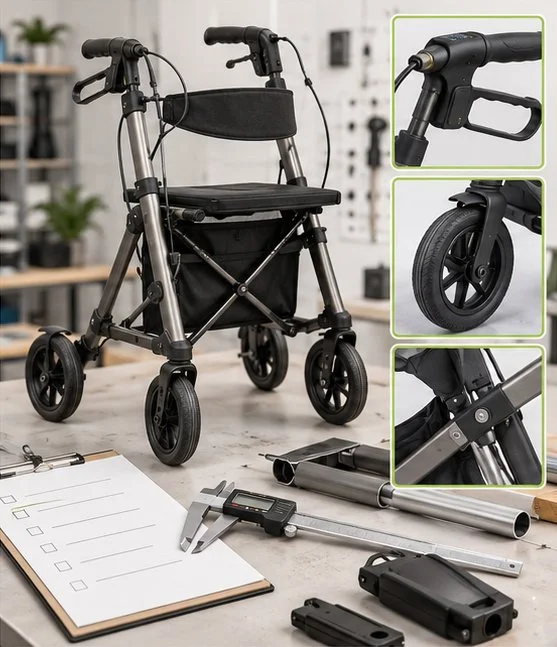
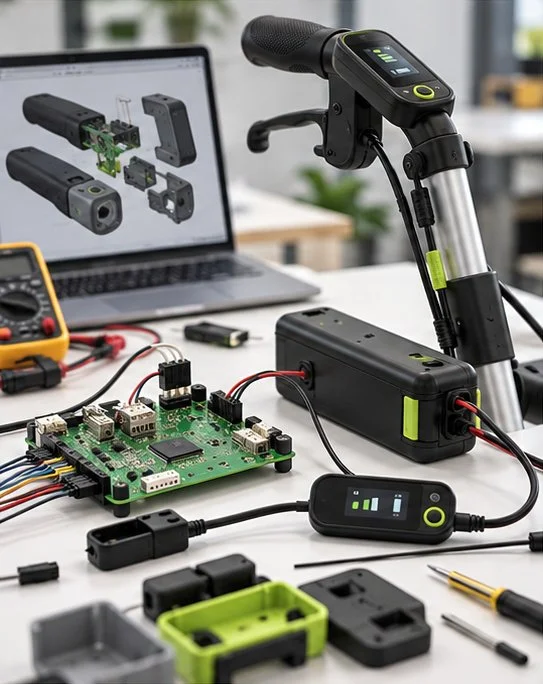
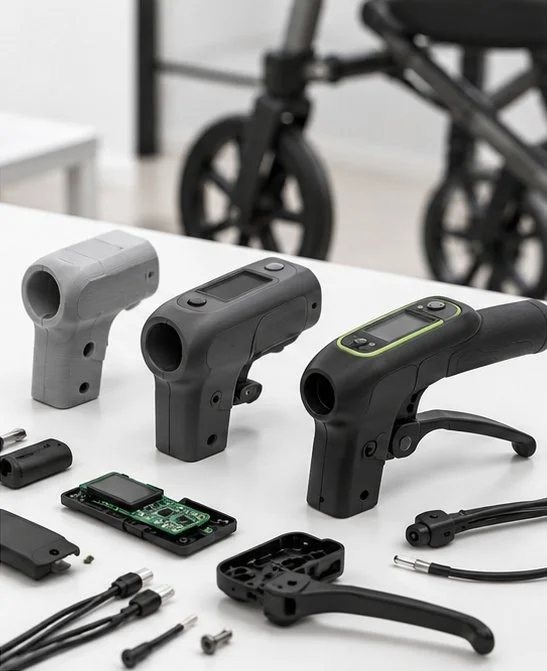
Physical prototypes help us check size, handling, fit, assembly and function. We select 3D printing, machining or fabrication to suit the questions being tested.
A prototype may test a single feature or a more complete assembly. Its materials and construction may differ from final production.
Refine the design
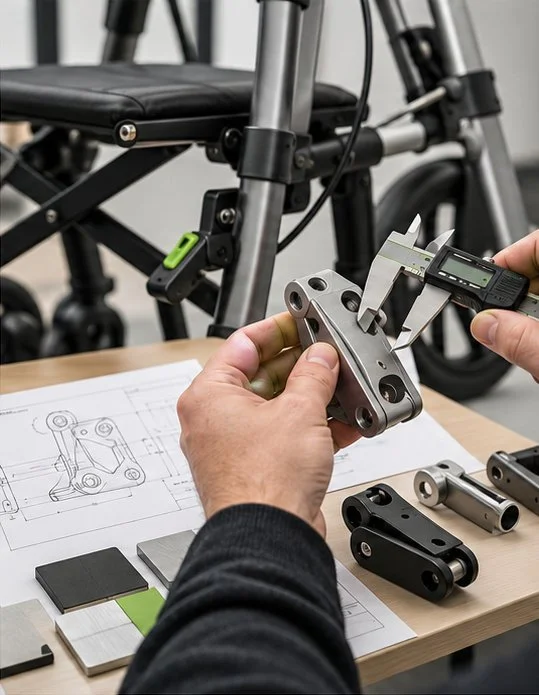
We use test results and your feedback to improve dimensions, mechanisms, strength, usability or assembly.
Further prototypes may be needed to check changes. Each round focuses on specific questions and progress towards the agreed requirements.
Manufacturing readiness
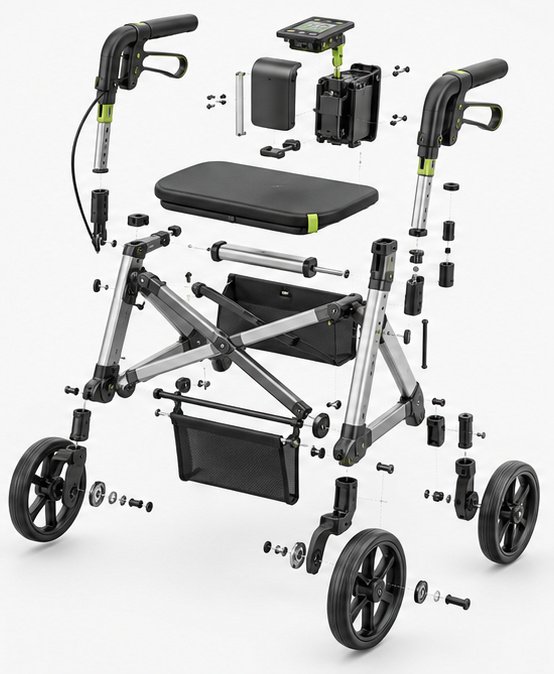
We prepare the agreed CAD files, drawings, material and finish specifications, and assembly information for the intended manufacturing method.
We can review supplier feedback and adjust the design to suit production. Samples, tooling trials or specialist testing may still be needed before full production.

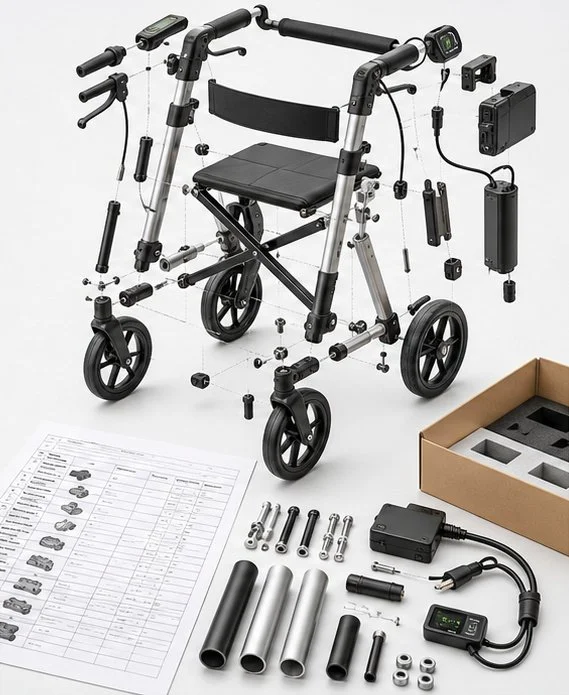
What you receive
Useful files.
Clear next steps.
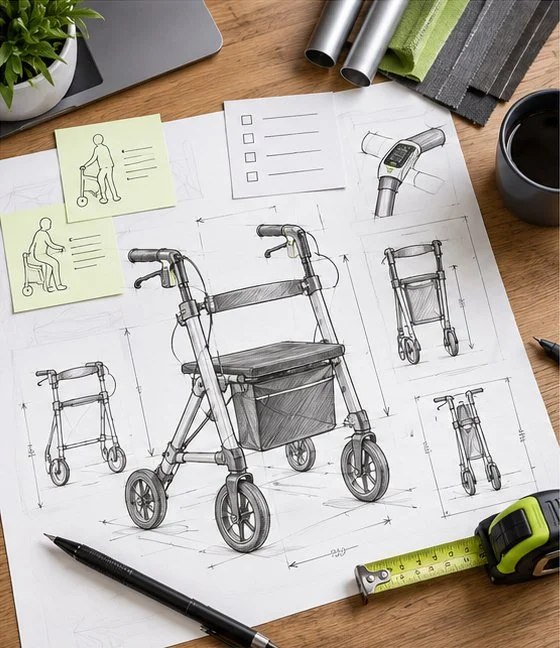
Your deliverables are agreed to suit the work, whether you need a single part, prototype files or a supplier handover package.
We can supply native editable SolidWorks files, STEP and STL files, along with drawings, specifications and assembly notes where expressly included in the agreed scope. File formats and deliverables are confirmed before work begins and supplied after payment for the relevant work.
Reports document progress, findings and recommended next steps. Project-specific intellectual property transfers on payment of the fees and approved costs attributable to that work, subject to the agreement. Pre-existing tools and third-party material are treated separately.
SolidWorks
Native editable part and assembly files.
STEP
3D files for manufacturers and other CAD systems.
STL
Mesh files commonly used for 3D printing.
Fees and project structure
The right approach for your project.
We recommend an approach based on how clearly the work can be defined at the start. Rates and the proposed scope are discussed before work begins.
01 / Clearly defined tasks and hourly support
Hourly design work
Suitable for a single-part design, model modification or other work guided by clear client instructions. Hourly support can also be used for broader development where agreed.
- Before each work period, we agree the tasks, intended outputs, review point and maximum hours or service-fee budget in writing.
- Fees reflect actual authorised time worked. Time is recorded in minutes, with no minimum session charge.
- We seek written approval before exceeding the agreed limit or starting further work.
- A time estimate guides planning. An approved budget limits spending; it does not guarantee completion within that amount.
Invoices are issued weekly and are normally payable within seven calendar days. Prepayment applies only if separately agreed. Progress reports accompany weekly invoices and the end of an approved work period.
02 / Product development
Stages and prepaid sessions
A stage defines an objective and agreed deliverables. Sessions provide the focused work needed to develop them, with a separate written approval for each session.
- A session typically involves four hours, generally three to five hours, with a maximum of five hours.
- Work may be completed in one sitting or spread across a few days.
- The fixed session fee is agreed in advance and is not calculated by the hour.
- Tasks, priorities, intended outputs, timing and any separate costs are agreed before the session starts. Sessions are prepaid unless credit is separately agreed.
Authorised research, design, CAD, testing, sourcing, meetings, reporting and routine project communication count towards session time. Passive machine running time and waiting for responses do not.
When a guaranteed stage cap applies
After completing feasibility, we assess whether there is enough information to offer a guaranteed cap for a defined development stage. A cap applies only when it is expressly agreed in writing, with the deliverables, measurable completion criteria, intended next stage, assumptions, exclusions, session fee and maximum stage service fee.
For an agreed capped stage, we commit to completing those deliverables and criteria within the capped service fee, ready for the identified next stage. If the agreed scope remains unchanged, further work needed to meet those criteria carries no additional service fee. Tasks and timing still require your approval, and the commitment depends on the required information, feedback, authorisations and payments.
Completion of feasibility does not automatically create a cap. Without a written cap, session numbers and ranges remain estimates. You may choose uncapped development, with each session separately approved and prepaid. A capped stage may use a different session fee to reflect its completion commitment; the applicable fees are agreed before work begins.
Small, clearly defined projects
A straightforward hourly approach to single-part design.
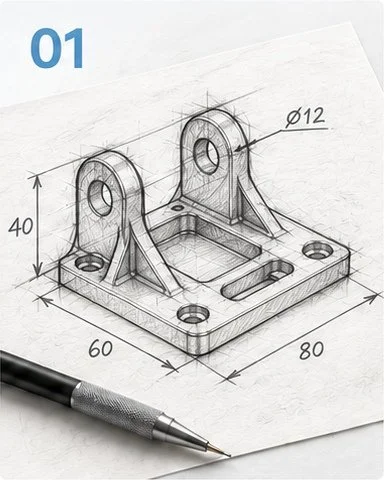
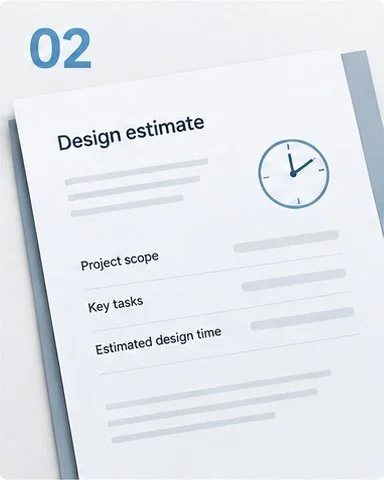
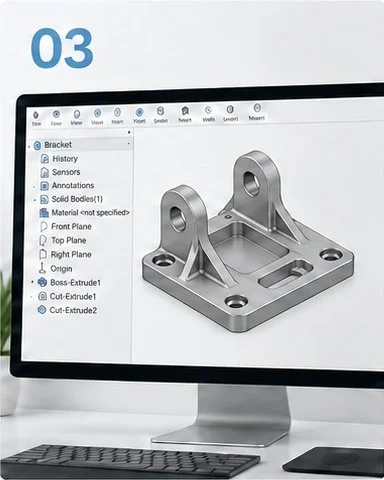
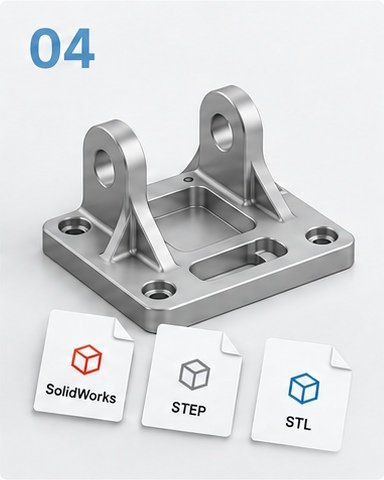
Clear instructions
Share dimensions, sketches and requirements.
Time estimate
Review the scope and estimated design time.
Hourly design work
Your part developed in SolidWorks.
Agreed files
Native SolidWorks, STEP and STL files, as agreed for your project.
Product development
Structured stages. Focused sessions. Regular review.
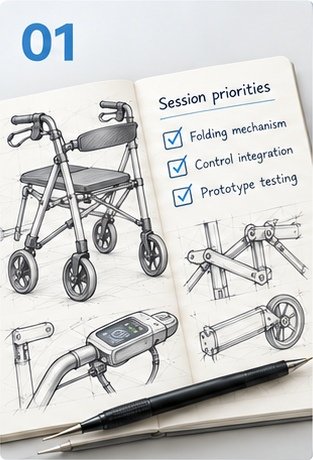
Agree session priorities
Set the tasks, questions and intended outcomes.
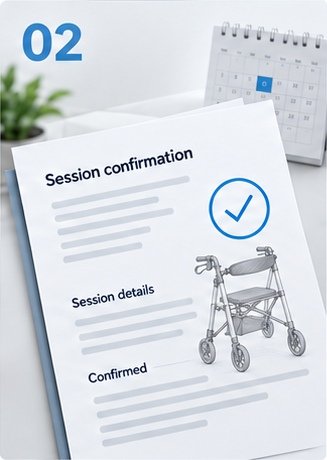
Prepay session
Confirm your session so work can be scheduled.
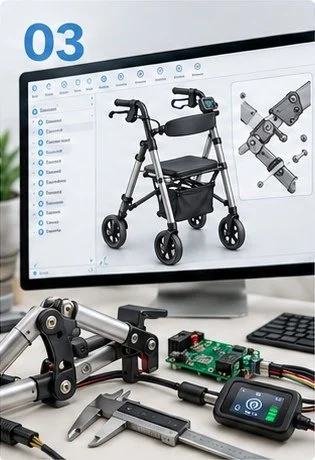
Development work
Progress the agreed design and testing tasks.
Report and feedback
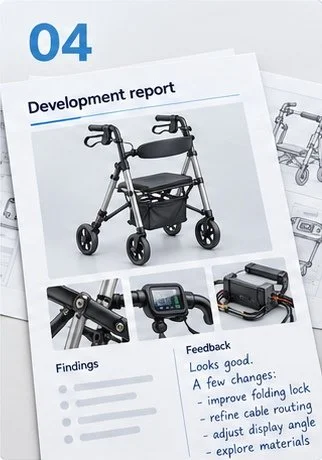
Review progress, findings and your feedback.
Decide the next step
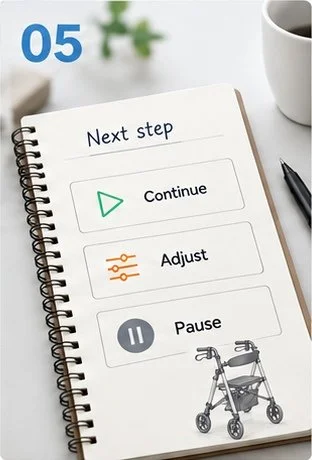
Continue, adjust the direction or pause.
If continuing, agree the next session
A stage may require several sessions. Each session funds focused development time.
Reports, feedback and your next decision
After each session, you receive a brief report covering work completed, findings, progress against stage objectives, unresolved issues and recommended next steps. Relevant sketches, CAD views or prototype photographs support the report where applicable.
The report also identifies sessions used, the remaining allowance, fees and approved costs incurred, and any prepaid balance. Report preparation and routine session communication are included in the session fee and hours.
At agreed review points and before a new stage, we pause further chargeable development for your written decision. You can accept a completed stage and proceed, request completion of outstanding agreed work, approve a change or further exploration, pause or stop. Accepting a proposal does not automatically authorise every session, and you are not obliged to purchase unused sessions or later stages.
Refinement, further exploration and scope changes
Work needed to meet the original completion criteria of a capped stage remains within its agreed service-fee cap. Reaching the session allowance does not make an unfinished stage complete, and outstanding agreed work is not moved into a later paid stage.
Once the agreed stage is complete, you may want to explore more alternatives, revisit a direction or add prototype iterations beyond the agreed scope. This can be quoted as further paid work, with your written approval before it begins. Changes to requirements, deliverables or assumptions are also discussed and agreed in writing. Corrections required because of our error are not charged as additional exploration.
If a technical obstacle prevents an agreed outcome, we explain it and seek an agreed resolution. Findings or supplier feedback do not automatically increase a cap. A stage-completion commitment does not guarantee certification, manufacturing cost or commercial success.
Prototypes, external costs and coordination
Prototype materials, printing, machining, components, samples, tooling, freight, travel and specialist services are additional only where identified and approved in writing before commitment. The approval records the amount or maximum budget. Costs already included in the agreed fee are not charged again.
Supplier coordination and project management are covered by the agreed session activities or approved hourly work. Commercial production orders, tooling and import arrangements require separate written terms and approval.
Timing is discussed for your project and reviewed as development progresses. Complexity, feedback, supplier lead times and testing affect the overall programme.
Pausing or stopping
You can choose not to authorise further work. Fees for authorised work properly performed and approved unavoidable commitments remain payable, subject to the agreement and your legal rights. Any unused prepaid balance is reconciled and refunded within 14 calendar days of completion or termination. Available paid project work is handed over with its status and limitations identified.
Support beyond the CAD model
We help manage the complexity.
We can coordinate the agreed design, prototyping and manufacturing activities, giving you a clear point of contact while you remain involved in key decisions and approvals.
Prototyping and manufacturing
In-house 3D printing, supplier sourcing, quotation requests, manufacturing information and coordination of samples or production orders.
We help compare materials, processes, finishes and supplier feedback.
Stage and project management
Planning next steps, coordinating technical questions, tracking progress and keeping design revisions clear.
We keep you informed about timing, costs and decisions requiring your input.
Supporting consistent quality
Defining key specifications and inspection requirements, reviewing samples against the agreed design and coordinating issue resolution with suppliers.
The level of inspection and testing is agreed to suit the product and production requirements. We take care in our coordination work; independent suppliers remain responsible for their contracted performance.
A clear working relationship
Confidentiality and agreements.
Protecting confidential information
We can provide a non-disclosure agreement (NDA) before you share confidential project details. It sets out how confidential information is handled during discussions and development.
Start with a general description of the assistance you need, and we can arrange an NDA before reviewing the details. We seek written approval before sharing confidential project information with prospective manufacturers or using your project in our portfolio.
Understanding the terms
Before paid work begins, we provide a service agreement covering the fee approach, payment arrangements, design files and ownership, confidentiality, and how changes or pauses are managed.
The accepted proposal and written work approvals define the scope, deliverables, file formats, fees and any expressly agreed stage cap. Signing the agreement does not automatically authorise future work. Existing signed confidentiality or intellectual property agreements are identified and any conflicts resolved before affected work proceeds.
Client Feedback
What clients say about working with Chris at Formekta
Feedback from completed CAD design, 3D printing, prototyping, product development and technical design projects.
Discuss your project
What would you
like to develop?
Send us your sketch, existing part or project idea. We can review your starting point and recommend the next step.
Send an enquiryUseful information to include
- A short description of the problem and intended user.
- Sketches, photographs, dimensions or existing files.
- Known materials, quantities, budget and timing.
Have confidential details? Ask for an NDA first.